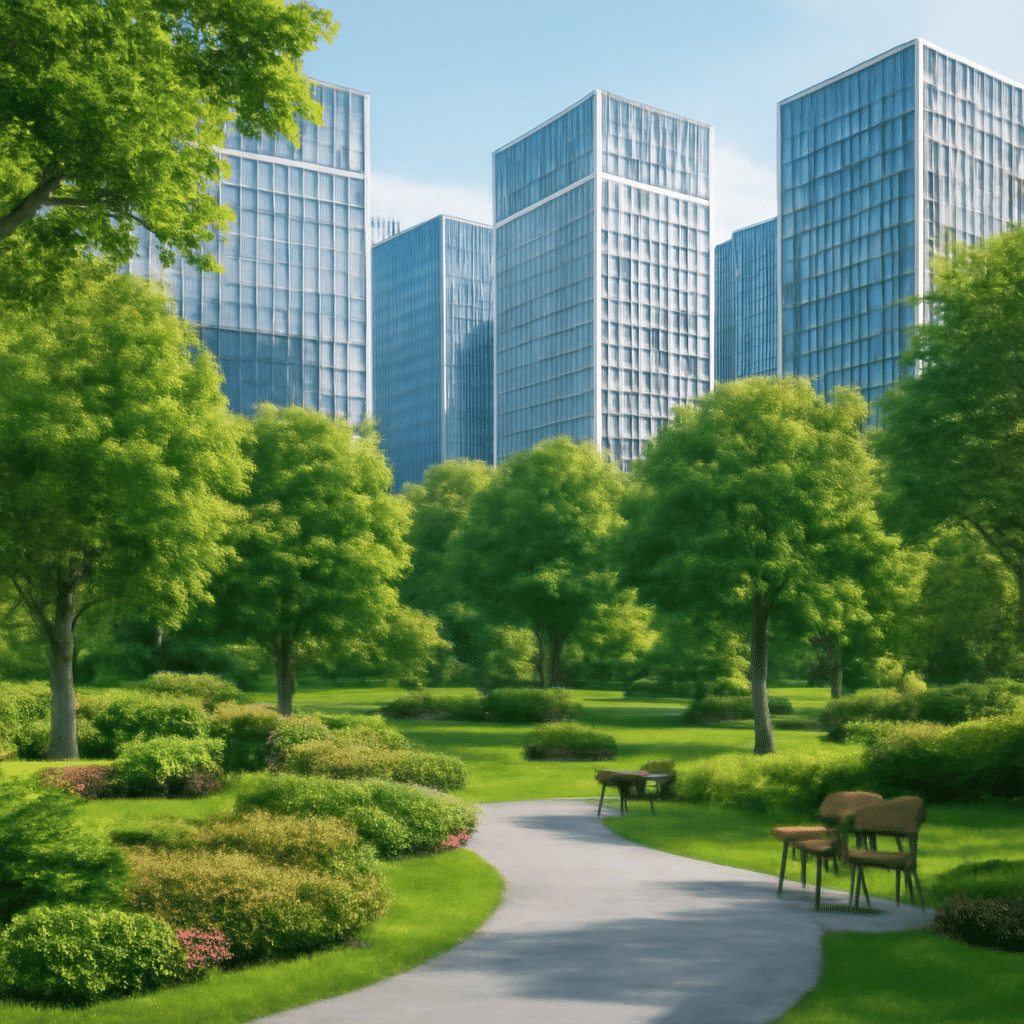
As urbanization continues to accelerate globally, cities are facing the dual challenge of accommodating growing populations while maintaining environmental sustainability. One of the most promising solutions to this challenge lies in the innovative integration of green spaces within urban planning. Incorporating nature into cityscapes not only enhances the quality of life for residents but also plays a crucial role in promoting environmental sustainability.
First and foremost, urban green spaces directly contribute to improved air quality. Plants and trees absorb carbon dioxide, release oxygen, and filter pollutants and dust from the air, providing cleaner and healthier environments for urban dwellers. Moreover, greenery helps in managing urban heat. By providing shade and releasing moisture into the air, green spaces contribute to cooling city environments, thus combating the heat island effect that is common in densely built areas.
Another significant impact of urban green spaces is their ability to mitigate flood risks. Innovative designs such as rain gardens, green roofs, and permeable pavements can be integrated into urban landscapes to absorb and manage stormwater. This not only reduces the pressure on drainage systems but also prevents water pollution and decreases the likelihood of urban flooding.
Socially, green spaces offer a breath of fresh air in hectic urban settings. Parks, gardens, and recreational areas provide a sanctuary for interaction, relaxation, and physical activities, enhancing mental well-being and community cohesion. These areas encourage social interaction, fostering diverse communities and inclusive cities where residents have a common space to connect and engage.
Economically, green urban designs can lead to increased property values, attract businesses, and boost tourism by making cities more livable and attractive. Furthermore, the implementation and maintenance of green spaces create jobs and stimulate local economies.
Cities worldwide are pioneering exciting models of such integration. For instance, the "parklet" movement in San Francisco creatively transforms parking spaces into mini-parks. In Singapore, the "Gardens by the Bay" initiative seamlessly blends botany with impeccable design, becoming an icon of urban green integration. Meanwhile, cities like Amsterdam are embracing green roofs, where residential and commercial buildings are increasingly topped with vegetation, promoting biodiversity and energy efficiency.
In conclusion, the integration of green spaces into urban planning is more than just an aesthetic endeavor; it's a strategic move towards sustainable urban development. As cities evolve, there's an imperative need for planners, architects, and policymakers to reimagine urban landscapes by prioritizing green infrastructure. By doing so, cities can enhance their resilience against climate change, improve the well-being of their inhabitants, and carve a path towards a sustainable, harmonious coexistence with nature.